Standing in the bread aisle can feel overwhelming. Packages boast claims like “stone-ground,” “12-grain,” and “all-natural.” Two of the most common—and most confusing—terms you’ll see are “multi-grain” and “whole grain.” They sound similar, and both seem healthy, right? This common misconception can lead you to choose a product that isn’t as nutritious as you think.
Let’s clear the air, bust the myths, and give you the confidence to choose the best option for your health.
The “Multi-Grain” Myth: More Isn’t Always Better
The Myth: Multi-grain bread is one of the healthiest choices because it contains many different types of grains.
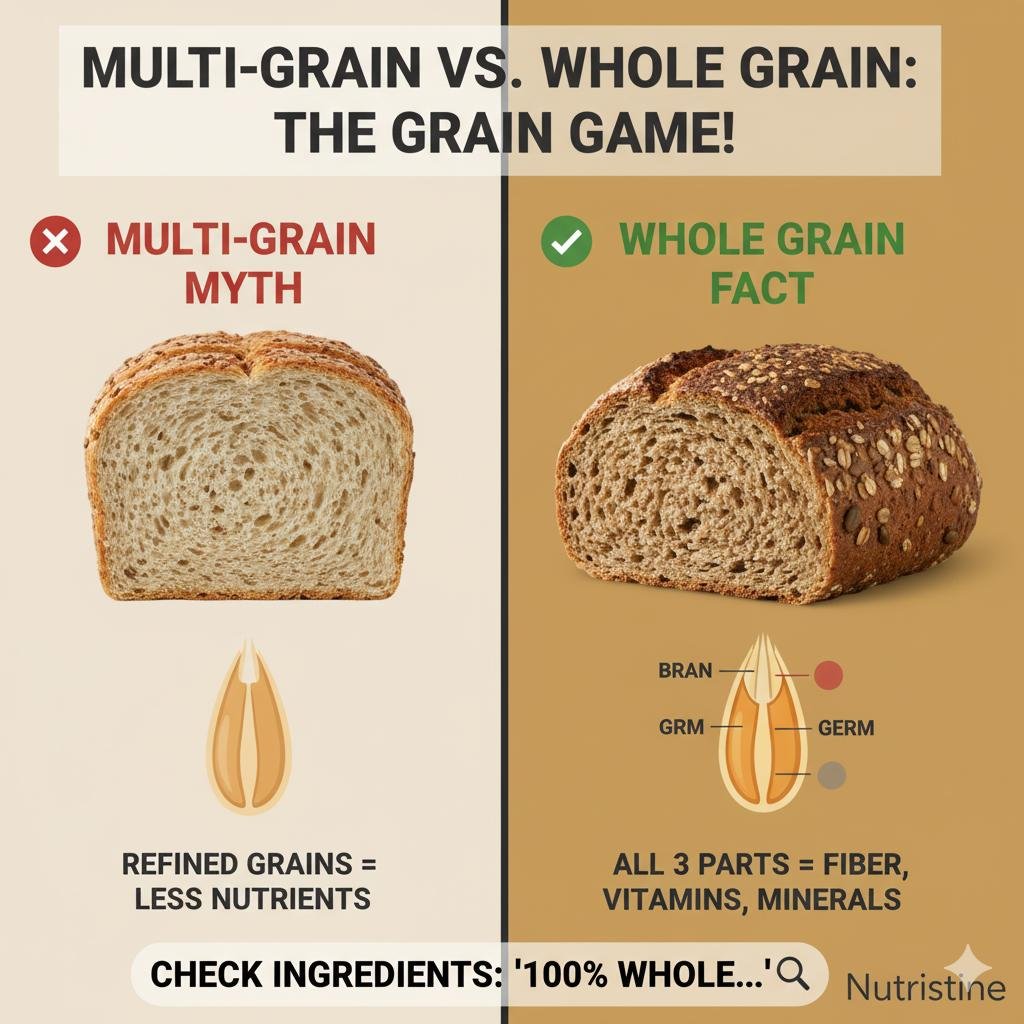
The Fact: The term “multi-grain” simply means that a product contains more than one type of grain. These grains could be wheat, oats, barley, quinoa, and more. However, it says nothing about the state of those grains. They can be—and often are—refined.
When a grain is refined, its most nutritious parts, the bran and the germ, are stripped away. This process removes the majority of the fiber, vitamins, minerals, and healthy fats, leaving behind the starchy endosperm. So, a multi-grain bread could just be a mix of different types of refined flour, essentially making it a slightly more varied version of white bread.
The “Whole Grain” Fact: The Undisputed Nutritional Champion
The Myth: “Whole grain” is just a marketing buzzword for brown bread.
The Fact: “Whole grain” is a nutritional powerhouse with a specific definition. To be called whole grain, a product must contain all three parts of the original grain kernel in their original proportions:
- The Bran: The outer layer, rich in fiber, B vitamins, and minerals.
- The Germ: The embryo of the seed, packed with healthy fats, B vitamins, vitamin E, and antioxidants.
- The Endosperm: The starchy middle layer, which provides carbohydrates and some protein.
By keeping all three parts intact, whole grains deliver a complete nutritional package that supports overall health.
How to Be a Savvy Shopper: Reading the Label
Marketing on the front of the package can be misleading. The key to making a healthy choice lies in reading the ingredients list and the nutrition facts panel. Here’s what to look for:
- Check the First Ingredient: The first ingredient should always be “100% whole wheat,” “100% whole grain,” “whole oats,” or another whole grain. If the first ingredient is “wheat flour” or “enriched flour,” it’s a refined grain product.
- Ignore Misleading Colors: Don’t be fooled by the dark color of a bread. Some manufacturers add molasses or caramel coloring to make refined bread look like whole wheat.
- Look for Fiber: A good whole grain product will typically have at least 2-3 grams of fiber per serving. The more, the better!
Our Recommendation for a Healthy Diet
For optimal health, we recommend making at least half of your daily grain intake whole grains. They are a cornerstone of a balanced diet, linked to numerous health benefits, including:
- Improved digestive health due to high fiber content.
- Better weight management by promoting a feeling of fullness.
- Reduced risk of chronic diseases like heart disease, type 2 diabetes, and certain cancers.
- More stable blood sugar levels.
Easy Swaps to Boost Your Whole Grain Intake:
- Choose 100% whole wheat bread over white or multi-grain.
- Opt for brown rice or quinoa instead of white rice.
- Switch to whole-grain pasta.
- Start your day with oatmeal or a whole-grain cereal.
The verdict is clear: while “multi-grain” sounds appealing, “whole grain” is the term that guarantees you’re getting the fiber, vitamins, and minerals your body needs. By becoming a smart label reader, you can navigate the grocery store with confidence and make choices that truly nourish you.
Ready to optimize your diet? Contact us for a personalized nutrition consultation today!