Walk down the dairy aisle of any grocery store, and you’ll be met with a dizzying array of choices. From traditional cow’s milk to a growing family of plant-based alternatives like almond, soy, and oat, it’s easy to feel overwhelmed. So, which one is the “best”? The simple answer is: there is no single “best” milk for everyone. The right choice depends entirely on your individual nutritional needs, dietary restrictions, taste preferences, and health goals.
Let’s break down the most popular options to help you find the perfect milk for your lifestyle.
The Classic Choice: Cow’s Milk
For generations, dairy milk has been a nutritional staple, and for good reason. It’s a natural powerhouse of essential nutrients.
Nutrition Profile
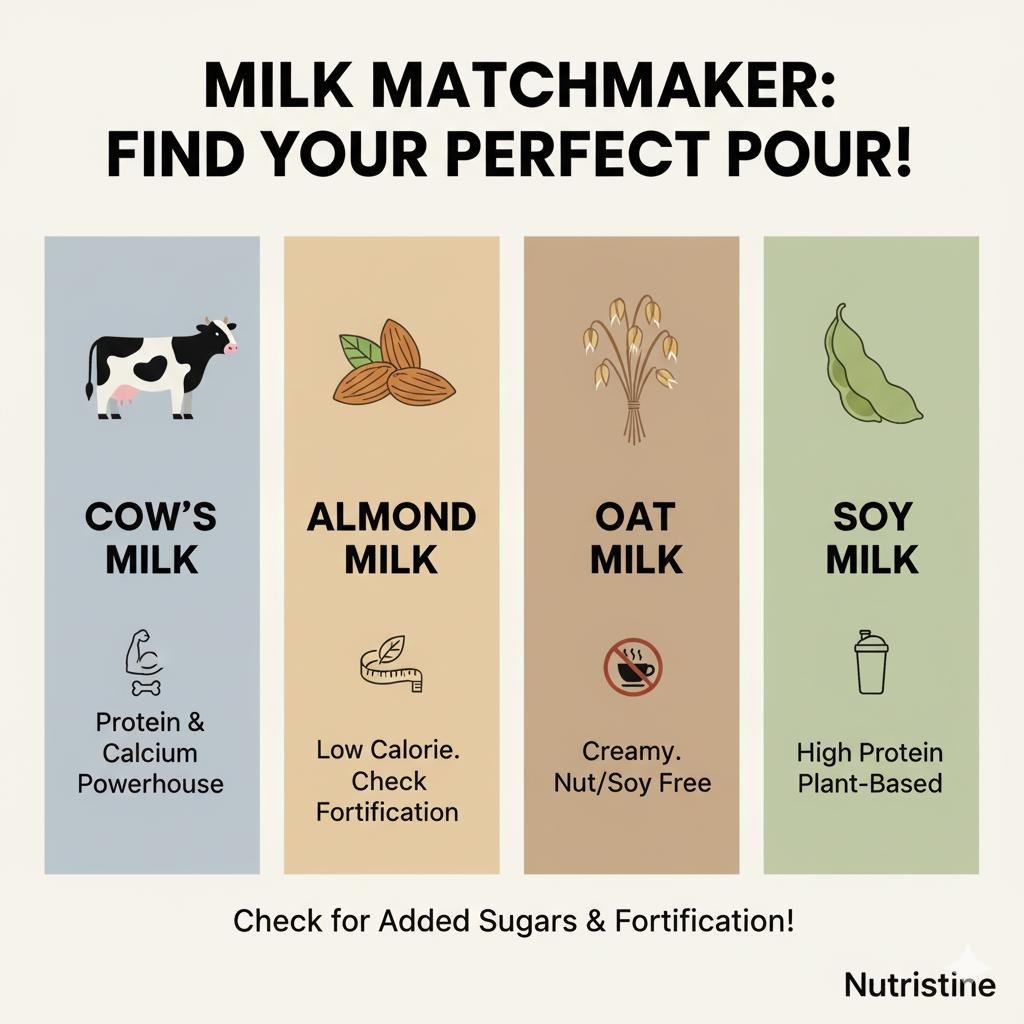
Cow’s milk is an excellent source of high-quality, complete protein, containing all nine essential amino acids. It’s naturally rich in calcium for bone health and is typically fortified with Vitamin D, which helps your body absorb that calcium. It also provides Vitamin B12, potassium, and phosphorus.
Best For:
- Growing children over the age of one who need protein, fat, and calories for development.
- Athletes or individuals looking to build and repair muscle.
- Anyone without a milk allergy or lactose intolerance seeking a nutrient-dense beverage.
Considerations:
The primary concerns are lactose intolerance, a common condition that makes dairy difficult to digest, and milk allergies. The fat content also varies between whole, 2%, 1%, and skim options.
The Plant-Based Powerhouse: Soy Milk
Soy milk is one of the original dairy-free alternatives and remains one of the most nutritionally comparable to cow’s milk.
Nutrition Profile
Of all the plant-based milks, unsweetened soy milk comes closest to cow’s milk in protein content, and it’s also a complete protein. Most commercial soy milks are fortified with calcium and Vitamin D to mimic the profile of dairy milk.
Best For:
- Individuals looking for a high-protein, plant-based milk alternative.
- People with lactose intolerance or a dairy allergy.
- Someone wanting a creamy, versatile milk for cooking and smoothies.
Considerations:
Soy is a common allergen. Also, be sure to choose unsweetened varieties to avoid added sugars.
The Low-Calorie Option: Unsweetened Almond Milk
Almond milk is a hugely popular choice, largely thanks to its light texture and low calorie count.
Nutrition Profile
Unsweetened almond milk is significantly lower in calories, carbohydrates, and protein compared to cow’s milk and soy milk. While almonds themselves are a good source of Vitamin E, the milk is mostly water. It’s crucial to choose a version that is fortified with calcium and Vitamin D to get bone-health benefits.
Best For:
- Anyone focused on weight management or calorie reduction.
- People who prefer a lighter, less creamy taste in their cereal or coffee.
Considerations:
It is not a good source of protein, making it an unsuitable primary milk replacement for young children or athletes. Always check the label for added sugars in flavored or sweetened versions.
The Creamy Contender: Oat Milk
Oat milk has surged in popularity due to its incredibly creamy texture, making it a favorite among coffee lovers.
Nutrition Profile
Compared to other plant milks, oat milk is higher in calories and carbohydrates. It contains some protein (more than almond, less than soy) and is a source of soluble fiber, including beta-glucan, which may contribute to heart health. Like other alternatives, it’s best to select one fortified with calcium and Vitamin D.
Best For:
- Those with nut or soy allergies who need a dairy-free option.
- Anyone seeking a rich, creamy texture for lattes, coffee, or baking.
- Individuals looking to add more soluble fiber to their diet.
Considerations:
Oat milk is higher in calories than almond milk. Some brands add oils to enhance creaminess and sugars for taste, so reading the ingredients list is key. If you have celiac disease or a gluten sensitivity, ensure you choose a certified gluten-free oat milk.
How to Choose the Right Milk for You
Feeling clearer? To find your perfect match, ask yourself these questions:
- Do I have allergies or intolerances? This is the first and most important filter. If you have a milk allergy or lactose intolerance, dairy is out. If you have a nut allergy, avoid almond milk.
- What are my protein needs? If you’re an athlete or need a protein boost, cow’s milk or soy milk are your strongest options.
- Am I watching my calorie intake? Unsweetened almond milk is the clear winner for the lowest calorie count.
- What will I use it for? For a creamy latte, oat milk is a star. For a protein-packed smoothie, soy or dairy milk work best. For a light splash on your cereal, almond milk is great.
- Have I read the label? No matter which you choose, always check for two things: fortification (with calcium and Vitamin D) and added sugars. Opt for unsweetened whenever possible.
Ultimately, the milk aisle offers a fantastic range of choices that can fit nearly any dietary pattern. By understanding your own needs and learning to read the nutrition label, you can confidently choose the milk that’s truly best for you.