Embracing a vegan or vegetarian diet is a fantastic choice for your health, the environment, and animal welfare. Plant-based eating is packed with fiber, vitamins, and minerals. However, there is one crucial nutrient that everyone on a plant-based journey needs to be mindful of: Vitamin B12.
But don’t worry! Getting enough B12 is simple and straightforward with a little bit of knowledge. This guide will walk you through why B12 is so important and how to easily incorporate it into your vegan or vegetarian lifestyle.
What is Vitamin B12 and Why Is It So Important?
Vitamin B12, also known as cobalamin, is a water-soluble vitamin that plays a vital role in your body’s health. It is essential for:
- Red Blood Cell Formation: B12 is necessary to create healthy red blood cells that carry oxygen throughout your body.
- Nervous System Health: It helps maintain the protective sheath around your nerves, ensuring proper brain and nerve function.
- DNA Synthesis: It’s a key player in the creation and regulation of your DNA.
- Energy Production: A lack of B12 can lead to fatigue and weakness, as it’s involved in your body’s energy metabolism.
A deficiency in Vitamin B12 can be serious, leading to anemia, fatigue, nerve damage, and cognitive issues. That’s why ensuring a reliable source is non-negotiable.
The B12 Challenge on a Plant-Based Diet
Vitamin B12 is unique because it is not produced by plants or animals. It’s made by microorganisms like bacteria. Animals get B12 by eating food contaminated with these microbes or from their own gut bacteria. As a result, B12 is found naturally in animal products like meat, fish, eggs, and dairy.
Since plant-based foods do not naturally contain Vitamin B12, vegans and vegetarians must get it from fortified foods or supplements. It’s not a flaw in the diet, but simply a fact of modern food hygiene and B12’s microbial origins.
Top Vitamin B12 Sources for a Plant-Based Diet
Thankfully, there are two excellent and reliable ways to meet your Vitamin B12 needs.
1. Fortified Foods: Your Everyday B12 Boost
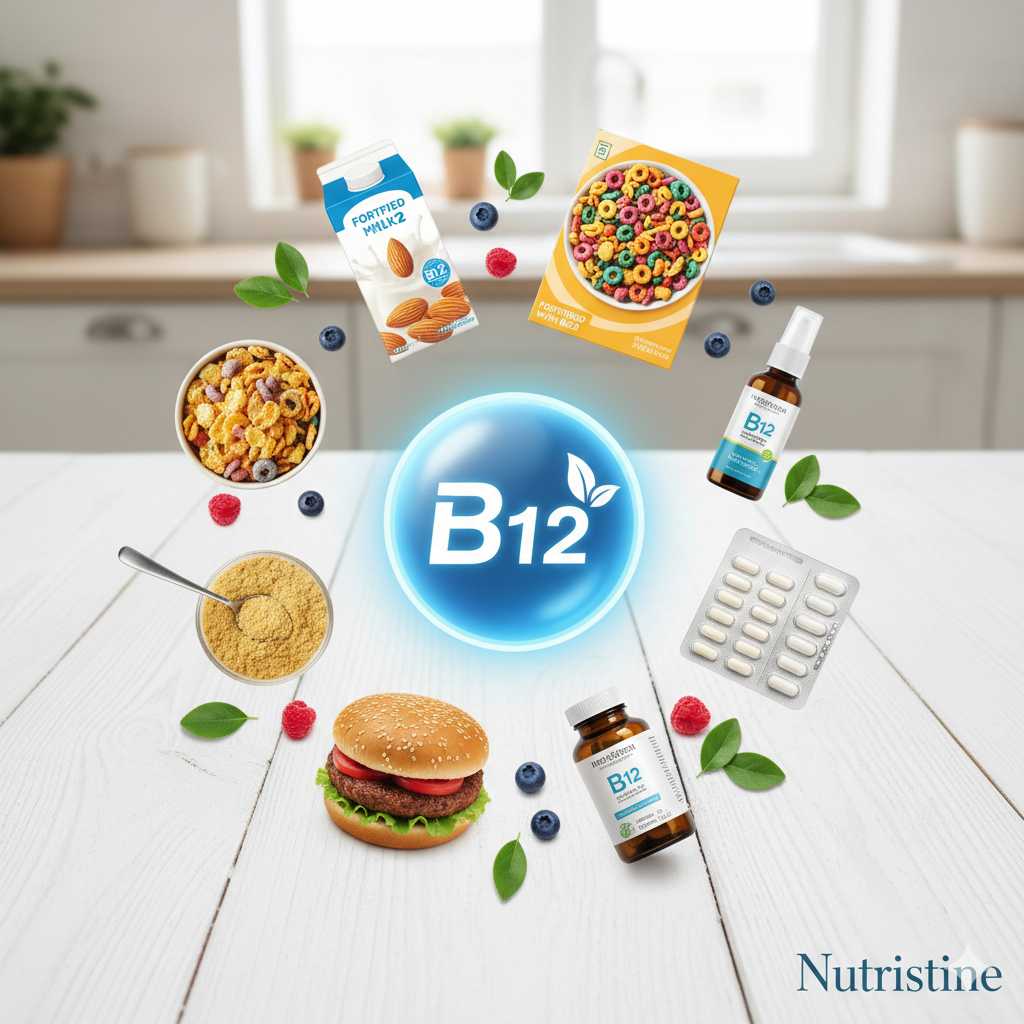
Many food manufacturers now add Vitamin B12 to their products, making it easier than ever to get your daily dose. Always check the nutrition label to confirm that a product is fortified and to see how much B12 it contains. Look for:
- Nutritional Yeast: Often called “nooch,” this is a vegan favorite. It has a cheesy, nutty flavor and is perfect for sprinkling on popcorn, pasta, or salads. Just two tablespoons can often provide more than your daily requirement.
- Fortified Plant-Based Milks: Many soy, almond, oat, and coconut milks are fortified with B12.
- Fortified Breakfast Cereals: Check the labels on your favorite cereals, as many are excellent sources of B12.
- Fortified Meat Alternatives: Some vegan burgers, sausages, and other meat substitutes have added B12.
- Fortified Plant-Based Yogurts and Spreads: As the market grows, more and more vegan products are being fortified.
While fortified foods are a great option, you need to eat them consistently to meet your needs.
2. Vitamin B12 Supplements: A Reliable Safety Net
For many, taking a supplement is the easiest and most reliable way to guarantee adequate B12 intake. It removes any guesswork and ensures you’re covered, especially on days when you might not eat enough fortified foods.
B12 supplements are affordable and widely available in several forms:
- Pills or Capsules: The most common form.
- Sublingual (under-the-tongue) Tablets or Sprays: These are absorbed directly into the bloodstream.
- Liquid Drops: Can be easily added to a drink.
The two most common forms of B12 in supplements are cyanocobalamin (more stable and widely studied) and methylcobalamin. Both are effective for preventing deficiency.
How Much Vitamin B12 Do You Really Need?
The Recommended Dietary Allowance (RDA) for adults is 2.4 micrograms (mcg) per day. Because the body can only absorb a small amount of B12 at one time, supplement dosages are often much higher than the RDA to ensure enough is absorbed.
Common supplement strategies include:
- Taking a daily supplement of 25-100 mcg.
- Taking a higher-dose supplement of 1000 mcg two to three times per week.
It’s always a good idea to discuss your specific needs with a healthcare professional or registered dietitian who can provide personalized advice.
The Bottom Line: Thrive with B12 on a Plant-Based Diet
A well-planned vegan or vegetarian diet is one of the healthiest ways to eat. Paying attention to Vitamin B12 is a critical part of that plan. By incorporating reliable sources like fortified foods and/or a B12 supplement into your routine, you can easily meet your needs and continue to thrive on your plant-based journey with energy and vitality.