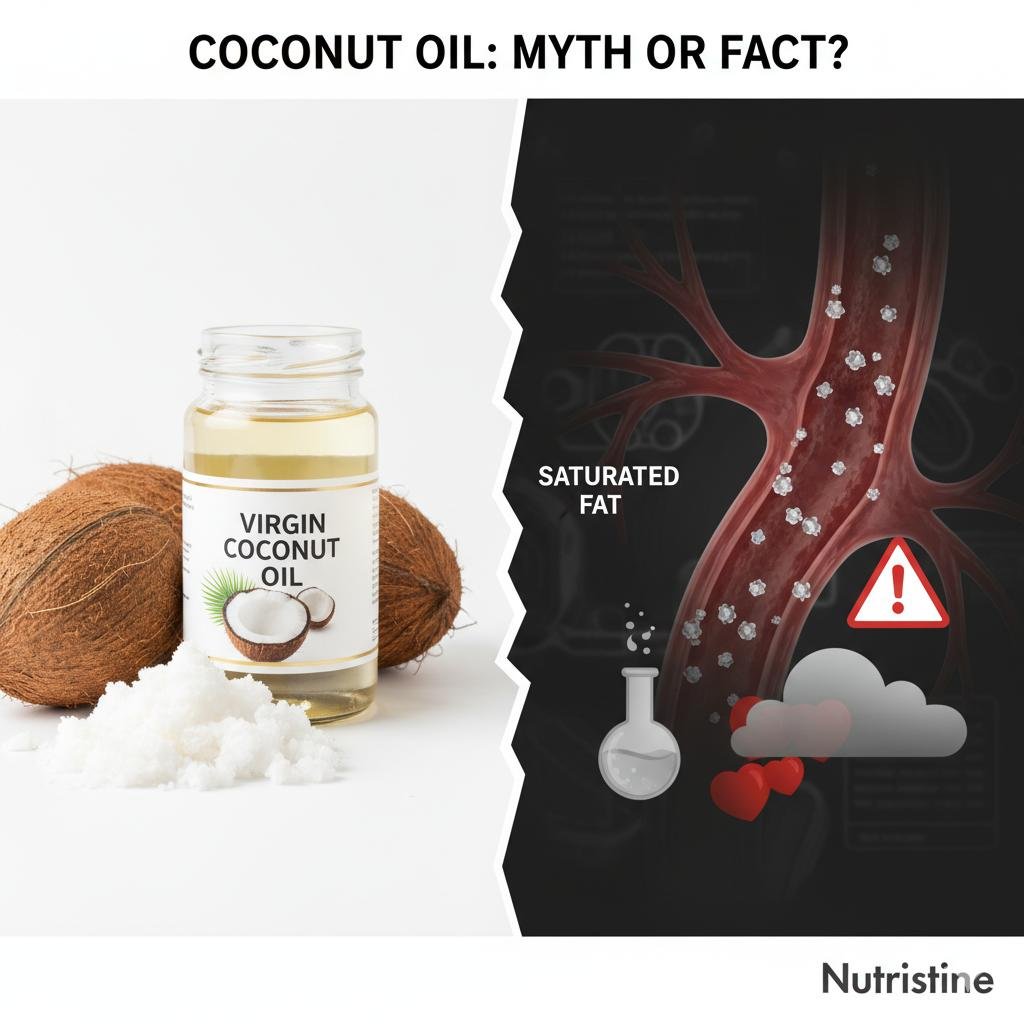
Walk down any health food aisle, and you’ll see coconut oil praised as a miracle food. It’s in everything from coffee to skincare, hailed for its supposed benefits for weight loss, brain health, and more. But you’ve also likely heard warnings about its high saturated fat content. So, what’s the truth? Is coconut oil healthy for everyone? Let’s break down the science for all ages and health levels.
Unpacking the Jar: What’s Really in Coconut Oil?
To understand coconut oil, we have to look at its unique composition. It is almost 90% saturated fat, which is higher than butter. This is the primary reason for the health controversy. However, not all saturated fats are created equal.
A large portion of the fat in coconut oil comes from Medium-Chain Triglycerides (MCTs). Unlike the long-chain fatty acids found in most other fats and oils, MCTs are metabolized differently. They go straight from the gut to the liver, where they can be used as a quick source of energy. This unique property is the source of many of its health claims.
The Health Halo vs. The Heart-Health Warning
The debate around coconut oil centers on its potential benefits versus the risks associated with its high saturated fat content.
Potential Perks of Coconut Oil
- Quick Energy Source: Because of the MCTs, the body can burn coconut oil for fuel more efficiently than other fats.
- May Raise “Good” Cholesterol: Some studies show that coconut oil can increase levels of HDL (good) cholesterol.
- Antimicrobial Properties: The lauric acid in coconut oil has been shown to have antimicrobial and antifungal properties.
Potential Problems and Risks
- Raises “Bad” Cholesterol: While it may raise HDL, numerous studies also confirm that coconut oil significantly raises LDL (bad) cholesterol, a known risk factor for heart disease.
- High in Calories: Like all fats, coconut oil is calorie-dense. A single tablespoon contains around 120 calories, which can contribute to weight gain if not used in moderation.
- Heart Health Concerns: Major health organizations, including the American Heart Association, recommend limiting saturated fat intake, including from coconut oil, to protect cardiovascular health.
Your Guide to Coconut Oil: A Lifespan Approach
Whether coconut oil is a healthy choice depends heavily on your age, health status, and overall diet.
For Healthy, Active Adults
If you have no underlying health conditions, using small amounts of virgin, unrefined coconut oil in your cooking is generally fine. Think of it as a replacement for butter or other solid fats, not as a substitute for heart-healthy unsaturated fats like olive oil or avocado oil. Moderation is the mantra.
For Children and Teenagers
Children need fat for development, but the focus should be on variety. While a little coconut oil in a baked good or a stir-fry is safe, it shouldn’t be a staple. Their diets should prioritize a mix of healthy fats from sources like nuts, seeds, fish, and avocados.
For Seniors
Older adults, especially those concerned with heart health, should be cautious. Given the strong evidence that coconut oil raises LDL cholesterol, other oils like extra virgin olive oil are a much safer and more beneficial choice for daily use.
For Those with Specific Health Conditions
- High Cholesterol or Heart Disease: If you have high LDL cholesterol or a history of heart disease, it’s best to significantly limit or avoid coconut oil.
- Trying to Manage Weight: Coconut oil is not a magic weight-loss food. Due to its high calorie count, portion control is essential. Using it won’t cancel out the calories.
- Digestive Issues: Some people find MCTs easy to digest, but for others, large amounts of coconut oil can cause stomach upset or diarrhea.
The Bottom Line: A Nutritionist’s Take on Coconut Oil
Coconut oil is neither a pure superfood nor a dietary villain. It’s a food with a complex profile that can fit into a healthy diet in very small amounts, but it doesn’t live up to the miraculous health claims often attached to it.
Here’s how to approach it wisely:
- Think Moderation: Use it sparingly, perhaps a teaspoon at a time, not tablespoons.
- Prioritize Unsaturated Fats: Make olive oil, avocado oil, nuts, and seeds the foundation of your fat intake.
- Choose Quality: If you use it, opt for virgin or extra-virgin coconut oil, as it is less processed.
- Consider Your Overall Diet: A teaspoon of coconut oil in an otherwise plant-forward, high-fiber diet is very different from adding it to a diet already high in processed foods and saturated fat.
Ultimately, the key to good health isn’t about a single ingredient but about your entire dietary pattern. Before making any significant changes, especially if you have a health condition, it’s always best to consult with your doctor.