
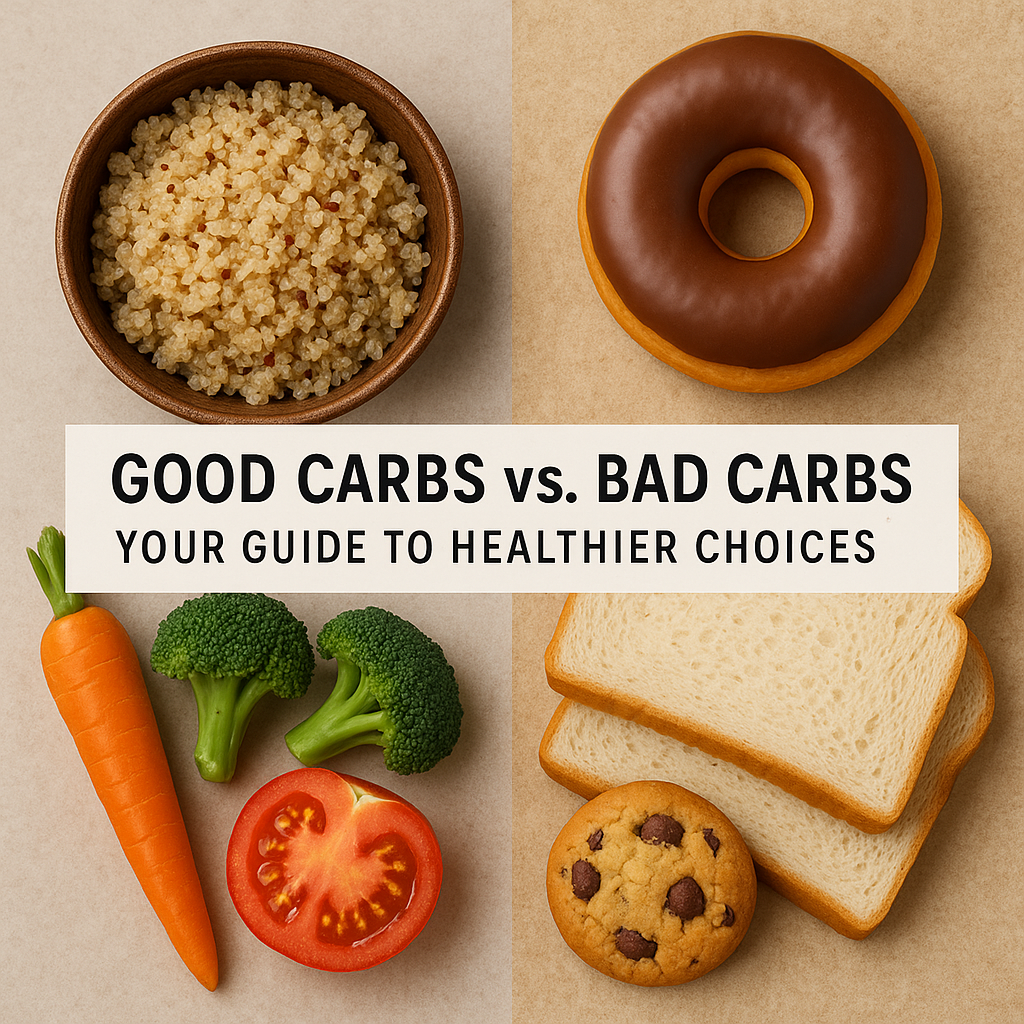
Not All Carbs Are Created Equal: A Guide to Choosing Healthier Carbohydrates
Carbohydrates have gotten a complicated reputation. For years, they’ve been blamed for weight gain and other health issues, leading many to try low-carb diets. But the truth is, carbs are your body’s primary source of energy. The key isn’t to eliminate them, but to understand the difference between healthier and less healthy options. Let’s break down the “good carbs vs. bad carbs” debate and help you make smarter choices for your health.
What’s the Difference? Complex vs. Simple Carbs
The core difference between carbohydrate sources lies in their molecular structure, which affects how your body digests them.
The “Healthier” Choice: Complex Carbohydrates
Healthier carbs, often called complex carbs, are found in whole, unprocessed foods. They are made of long, complex chains of sugar molecules that your body takes longer to break down. This slow digestion process is a major benefit.
Examples of healthier complex carbs include:
- Whole grains like oats, quinoa, brown rice, and barley
- Legumes such as lentils, chickpeas, and black beans
- Starchy vegetables like sweet potatoes, corn, and peas
- Whole fruits and vegetables
These foods are also packed with fiber, vitamins, and minerals, making them nutrient-dense powerhouses.
The “Less Healthy” Choice: Simple & Refined Carbohydrates
Less healthy carbs, or simple/refined carbs, have been processed, stripping them of most of their natural fiber, vitamins, and minerals. Their simple structure means your body digests them very quickly.
Common examples include:
- White bread, white rice, and white pasta
- Sugary drinks like soda and fruit juice
- Breakfast cereals with high sugar content
- Cookies, cakes, pastries, and candy
While they provide a quick burst of energy, it’s often followed by a crash, leaving you feeling tired and hungry again soon after.

The Powerful Benefits of Choosing Healthier Carbs
Making a conscious effort to choose complex carbs over simple ones comes with significant rewards for your health:
- Sustained Energy: The slow breakdown of complex carbs provides a steady, reliable stream of energy without the dramatic spikes and crashes.
- Improved Digestive Health: The high fiber content in healthier carbs promotes regular bowel movements and feeds the beneficial bacteria in your gut.
- Better Blood Sugar Control: Fiber slows the absorption of sugar, helping to prevent sharp rises in blood glucose levels. This is crucial for preventing and managing metabolic conditions.
- Aids in Weight Management: High-fiber foods are more filling, which can help you feel satisfied with smaller portions and reduce overall calorie intake.
A Word of Precaution for Medical Conditions
For individuals with certain health conditions, managing carbohydrate intake is especially important. People with diabetes, pre-diabetes, or insulin resistance need to be particularly mindful of their carb choices. Refined carbohydrates can cause dangerous spikes in blood sugar.
If you have any of these conditions, it is essential to work with a doctor or a registered dietitian. They can help you create a personalized eating plan that determines the right amount and type of carbohydrates for your specific needs, ensuring you manage your health effectively while still enjoying a balanced diet.
Simple Swaps for a Healthier Plate
Transitioning to healthier carbs doesn’t have to be difficult. Start with a few simple swaps:
- Instead of white rice, try quinoa or brown rice.
- Instead of sugary breakfast cereal, choose whole rolled oats with fresh berries.
- Instead of white bread, opt for 100% whole-wheat or whole-grain bread.
- Instead of soda or sweetened juice, drink water or unsweetened iced tea.
The Bottom Line: It’s About Balance, Not Banning
The goal isn’t to declare all simple carbs “bad” and banish them forever. An occasional treat can certainly fit into a healthy lifestyle. The key is to make complex, whole-food carbohydrates the foundation of your diet. By focusing on nutrient-dense options most of the time, you’ll fuel your body effectively, support your long-term health, and feel your best.