
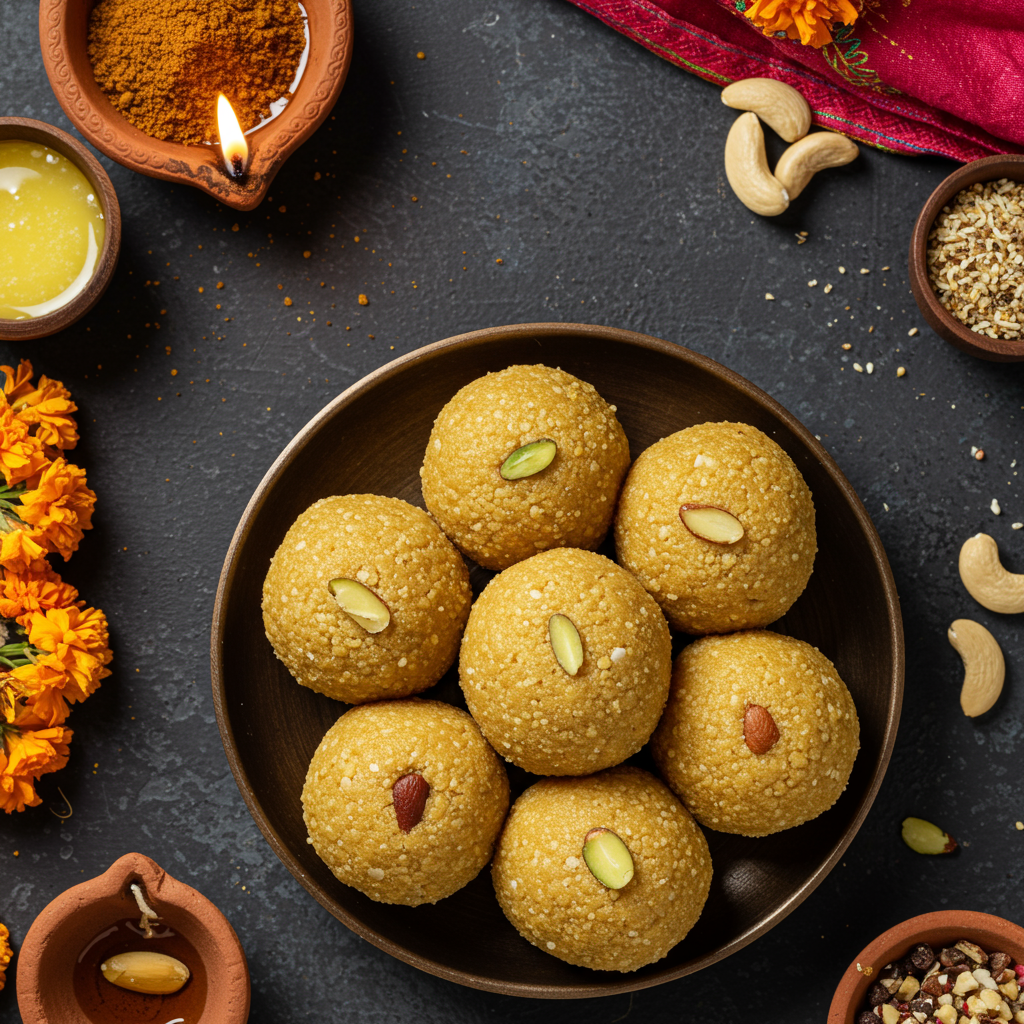
A Healthier Diwali Delight: Revamping the Classic Besan Laddu
Celebrating Tradition with a Healthy Twist
The festival of Diwali is synonymous with light, joy, and, of course, an array of delectable sweets. Among the most cherished is the Besan Laddu. The nutty aroma of gram flour slow-roasting in ghee is a core memory in many South Asian homes, signaling the arrival of festivities. These golden orbs are more than just a sweet; they are parcels of tradition, love, and celebration, shared among family and friends. This post celebrates this classic recipe while exploring how we can adapt it for a more health-conscious lifestyle without losing its festive spirit.
A Closer Look at the Traditional Ingredients
The magic of Besan Laddu lies in its simplicity, with just three main ingredients. However, two of these, when consumed in excess, can be detrimental to our health.
- Ghee (Clarified Butter): While ghee is a source of fat-soluble vitamins and cherished in Ayurveda for its properties, it is also very high in saturated fat. Diets high in saturated fat are linked to increased levels of LDL (bad) cholesterol, which can be a risk factor for heart disease.
- Sugar (Powdered or Boora/Tagar): This is the primary sweetener and is a form of refined, added sugar. Added sugars provide “empty calories” with no significant nutritional value. A high intake is a major contributor to health issues such as weight gain, type 2 diabetes, inflammation, and dental cavities.
Crafting a Healthier Laddu: Smart Swaps for a Better Bite
The good news is that with a few intelligent substitutions, we can create a laddu that is both delicious and nourishing. These replacements are compatible with the original recipe’s texture and taste profile.
- For Ghee → Reduce the Quantity: You don’t need to eliminate ghee entirely, but you can certainly use less. By slow-roasting the besan on a very low flame, you can draw out its natural nutty flavors using a significantly smaller amount of ghee. The key is patience, not more fat. This reduces the overall saturated fat and calorie content.
- For Sugar → Natural, Zero-Calorie Sweetener: Swap refined powdered sugar with a natural, zero-calorie powdered sweetener like a monk fruit and erythritol blend. This type of sweetener provides the desired sweetness and fine texture needed for the laddu to bind properly, but without the calories, carbs, or impact on blood sugar levels.
Nutrition Face-Off: Original vs. Healthy Recipe
Here is a summary of the approximate nutritional differences you can expect per laddu when you make these healthy swaps.
| Nutrient | Original Recipe (Approx. per Laddu) | Modified Healthy Recipe (Approx. per Laddu) |
|---|---|---|
| Saturated Fats | High | Moderately Reduced |
| Added Sugar | High (~8g – 10g) | 0g |
| Calories | High (~150 – 180 kcal) | Lower (~110 – 130 kcal) |
| Fiber | Good Source (~2g from besan) | Good Source (~2g from besan) |
Key Benefits of the Modified Healthy Recipe
By embracing these simple changes, you can enjoy your festive treats with added health benefits:
- Better Blood Sugar Control: Eliminating refined sugar makes these laddus a much safer option for individuals with diabetes or anyone looking to avoid sugar spikes.
- Supports Heart Health & Weight Management: With fewer calories and a reduced amount of saturated fat, this modified recipe is kinder to your heart and waistline.
- Rich in Protein and Fiber: The star ingredient, Besan (chickpea flour), remains unchanged. It is an excellent source of plant-based protein and dietary fiber, which promotes satiety and supports digestive health.
- Guilt-Free Indulgence: You can fully immerse yourself in the festive spirit and enjoy a traditional sweet without compromising your health and wellness goals.