As we age, we gain wisdom, experience, and perspective. But our bodies also change, and one of the most critical areas to focus on is our bone health. Strong bones are the foundation of an active, independent life, allowing you to enjoy everything from a simple walk in the park to playing with your grandchildren. This guide will explore why calcium is a senior’s best friend and how you can effectively combat age-related bone loss.
Why is Calcium Crucial for Elderly Health? The Link to Bone Loss
Think of your skeleton as a “calcium bank.” Throughout your life, your body constantly makes “deposits” and “withdrawals” of calcium from your bones in a process called remodeling. When you’re young, you deposit more than you withdraw, building strong, dense bones.
However, as we get older, this balance shifts. We start to withdraw more calcium than we deposit. If we don’t consume enough calcium through our diet, our body will take what it needs directly from our bones. Over time, this chronic withdrawal weakens the bone structure, making them porous and fragile. This condition is known as osteoporosis, and it significantly increases the risk of painful and debilitating fractures, particularly in the hip, spine, and wrist.
How Much Calcium Do Seniors Really Need?
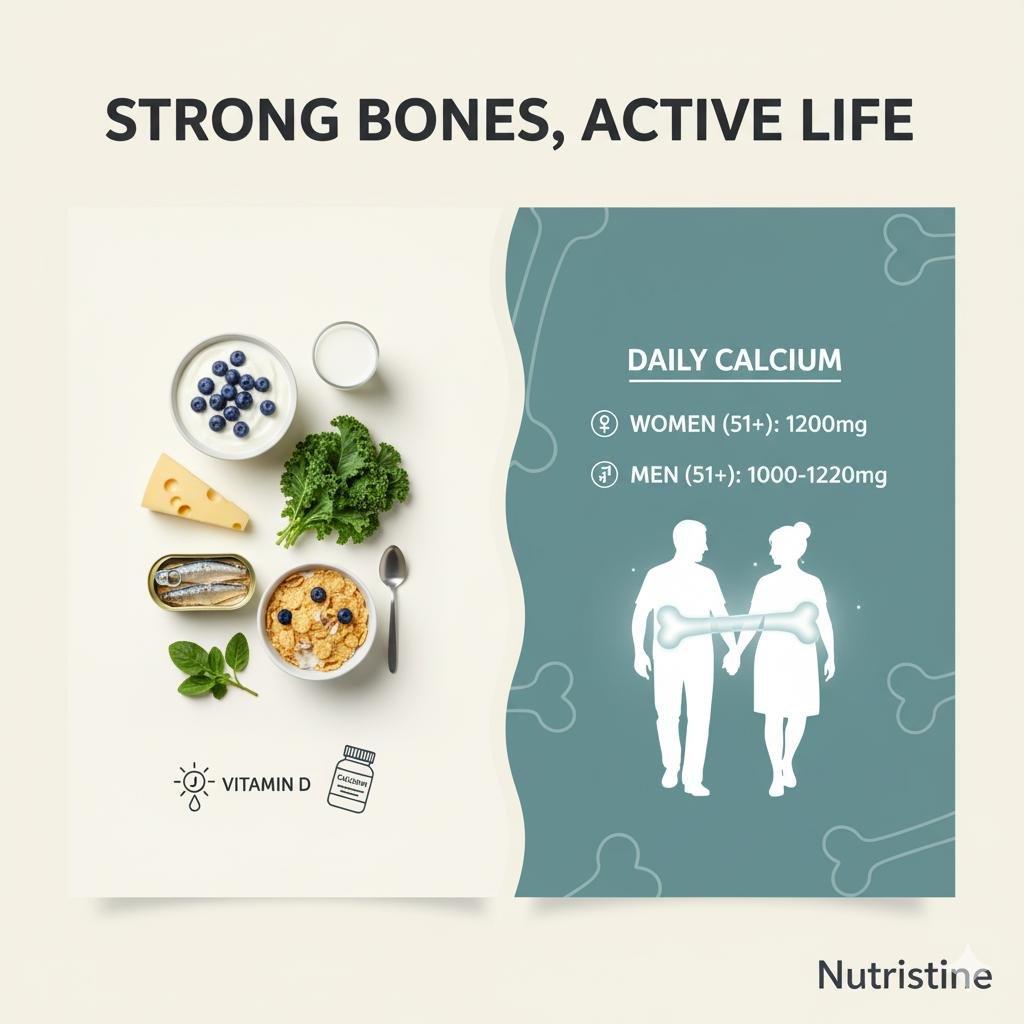
Calcium needs increase with age to counteract the accelerated bone loss. General recommendations from health authorities are:
- Women Age 51 and Over: 1,200 milligrams (mg) per day.
- Men Age 51 to 70: 1,000 mg per day.
- Men Age 71 and Over: 1,200 mg per day.
Meeting these goals is essential for maintaining bone density and reducing fracture risk.
Top Calcium-Rich Foods for Stronger Bones
The best way to get your calcium is through a balanced diet. Fortunately, many delicious and accessible foods are packed with this vital mineral. Try to incorporate a variety of these into your daily meals.
Dairy and Dairy Alternatives
- Yogurt: Plain, low-fat yogurt is an excellent source.
- Milk: Whether it’s cow’s milk or a fortified plant-based milk (like almond, soy, or oat), these are easy ways to boost your intake.
- Cheese: Hard cheeses like Parmesan and Swiss tend to have higher calcium content.
Non-Dairy & Plant-Based Sources
- Leafy Greens: Collard greens, kale, and spinach are fantastic choices.
- Canned Fish with Bones: Sardines and canned salmon are calcium powerhouses because you eat the soft, edible bones.
- Fortified Foods: Many breakfast cereals, orange juices, and tofu products are fortified with extra calcium. Check the nutrition label to be sure.
- Beans and Lentils: White beans, in particular, are a good source of calcium and fiber.
What About Calcium Supplements?
For some individuals, reaching their daily calcium goals through food alone can be challenging. In these cases, a calcium supplement can help fill the gap. However, it’s crucial to remember that more isn’t always better. Excessive calcium intake from supplements can have potential side effects.
Always consult with your doctor or a registered dietitian before starting any supplement. They can help you determine the right dosage and form (like calcium carbonate or calcium citrate) for your specific needs.
The Unbeatable Duo: Calcium and Vitamin D
Calcium can’t do its job alone. It needs a partner: Vitamin D. Vitamin D is essential for your body to absorb the calcium you consume. Without enough Vitamin D, the calcium from your food or supplements may not be properly utilized, undermining your efforts to protect your bones.
Your body can produce Vitamin D from sun exposure, but this ability decreases with age. You can also get it from foods like fatty fish (salmon, mackerel), egg yolks, and fortified milk and cereals. Your doctor may also recommend a Vitamin D supplement.
Your Action Plan for Better Bone Health
Protecting your bones is a proactive journey. By focusing on nutrition and a healthy lifestyle, you can build a stronger foundation for your senior years. Start today by incorporating more calcium-rich foods into your diet, ensuring you get enough Vitamin D, and speaking with a healthcare professional about a personalized plan to prevent bone loss and keep you moving strong for years to come.